The Ultimate UK Guide to Spalling Bricks and How to Fix Them
The Ugly Truth About Blown Bricks
There is one sight that makes almost every UK homeowner panic. You walk out one morning and notice little flakes of red clay sitting on the patio. You look up and see the face of your brickwork peeling away like an old sunburn. This is known in the building trade as spalling, or blown bricks, and it is a serious warning sign. It means your walls are losing their first line of defence against the elements and starting to take on water.
Quick Tip
If you have only just spotted a few flakes on the floor, there is no need to panic. Most early spalling is purely cosmetic at the start. It is a warning sign rather than an immediate structural collapse, which means there is usually time to get it sorted before things get expensive.
This guide explains exactly what is happening inside your walls. We look at why the British climate is usually the culprit, and we break down the real-world costs for a professional brick spalling repair, which in the UK typically sits between £12 and £26 per brick.
Planning a repair? If you need to knock down and rebuild a section of severely spalled masonry, make sure you order the right amount of replacement materials. Use our free UK brick calculator to determine exactly how many bricks and how much mortar your repair job requires.
Spotting the Early Signs
Before ringing round builders for a quote, it helps to know exactly what you are looking at on your own property. It is worth taking a few photos so you can clearly track the brick spalling before and after the wet winter weather hits. Here is a simple checklist for spotting the early warning signs on outside walls before the damp spreads and creates a brick spalling interior wall problem.
Crumbling Faces
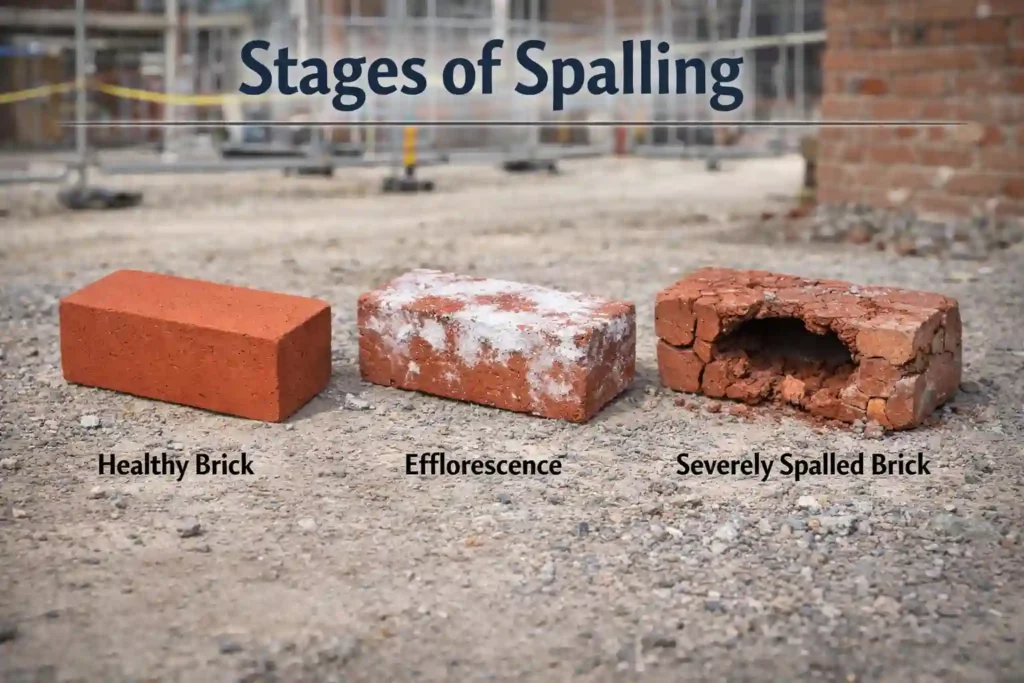
The most obvious sign is the surface starting to flake off. Often the centre of the brick hollows out first, leaving a rough, pitted texture behind. If you touch the wall and powder or small pieces fall off into your hand, there is an active moisture problem.
Cracking Mortar
Look closely at the joints between the bricks. If the mortar is cracking or chipping, it leaves the edges of the bricks exposed and vulnerable to rain.
Efflorescence:
This is a chalky white powdery substance that appears across the surface of the brickwork. It does not cause bricks to blow directly, but it is a strong clue that significant moisture is moving through the wall.
Why Do Bricks Spall in the UK?
The reasons walls crumble usually come down to a mix of the UK climate and some poor building choices.
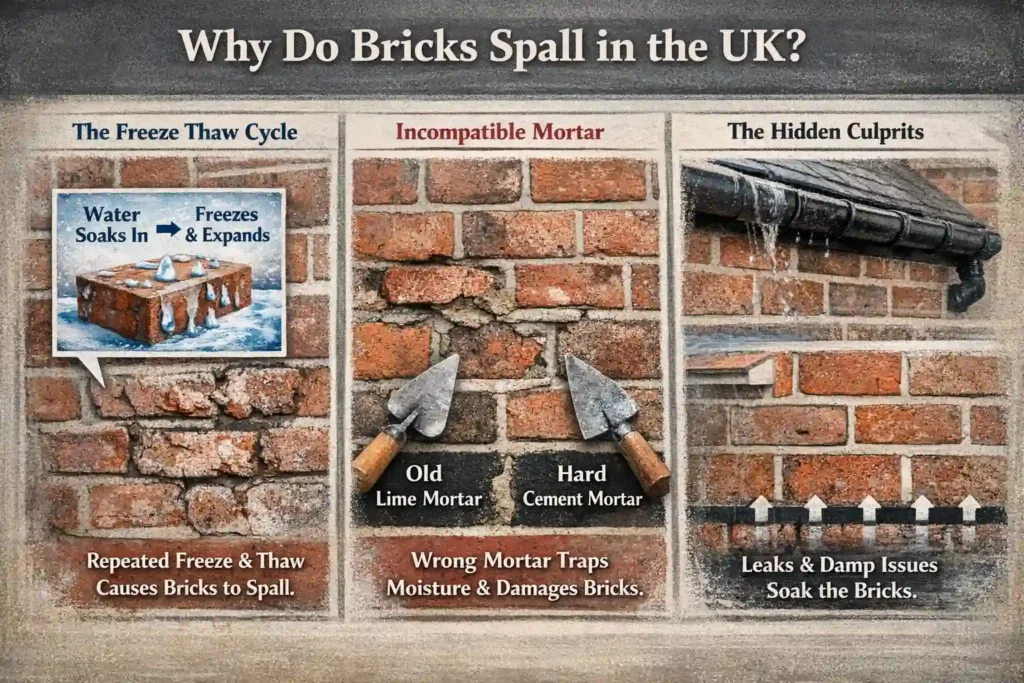
The Freeze Thaw Cycle
Clay bricks are naturally porous, which means they absorb rainwater like a sponge. When UK winters arrive and temperatures drop below zero, the water trapped inside the brick turns to ice. Because water expands when it freezes, the ice pushes hard against the brick’s internal structure. This is called the freeze-thaw cycle. As the cycle repeats over several cold winters, the outward pressure eventually blows the front face off the brick.
Incompatible Mortar
This is a common and damaging mistake on older properties. Historically, houses were built using soft lime mortar, which is highly breathable and allows moisture to escape. Over the years, many of those joints have been repointed using hard modern cement mortar. Cement is not breathable, so it traps moisture inside the wall. Because the water can no longer escape through the mortar joints, it forces its way out through the softer brick faces instead.
The Hidden Culprits
Sometimes the bricks and mortar are perfectly fine but are being battered by a secondary issue. Leaking gutters or blocked drains overflowing onto exterior walls will keep the bricks constantly saturated. Another common problem is a damaged damp-proof course, which allows ground moisture to rise into the lower brickwork. These hidden culprits must always be fixed first, before any bricks are replaced.
Brick Spalling Repair Cost and Why you should not DIY IT
The first thing most people want to know about a crumbling wall is the brick spalling repair cost. Many search for how to fix spalling brick without replacing, hoping for a cheap weekend fix. Here is a realistic look at the numbers for a proper repair based on current UK prices.
Repair Method | Estimated UK Cost | Best For |
|---|---|---|
Single Brick Replacement | £12 to £26 per brick | £12 to £26 per brick |
Full Wall Repointing | Varies by square metre | Walls suffering from bad cement mortar. |
Warning!! Step Away from the Trowel
A quick surface patch may sound appealing, but covering up a blown brick never lasts. Patching only hides the trapped moisture, and the face will eventually fall off again. The damaged brick must be physically cut out and replaced. This is best left to a professional: chiselling out old masonry is tough work, and a slip can destroy the healthy bricks right next to it, causing an even bigger structural problem.
Taking the proper route means the new bricks are bedded into fresh mortar correctly, and the wall regains its strength.
Taking the proper route means the new bricks will be bedded in fresh mortar correctly and your wall will regain its strength.
Prevention and Breathable Treatments
Once blown bricks are replaced, that investment needs protecting. Before applying any brick spalling sealant, the root cause of the damp must be fixed. If a broken gutter pours water down the wall, the repairs are wasted, because the frost damage will simply happen again. Get any leaks sorted first.
Next comes sealing the brickwork. Avoid standard masonry sealants. These form a non-breathable skin over the brick: they stop rain getting in but trap internal moisture inside the wall, causing more blown faces later. Instead, a highly breathable masonry cream is the better choice. These creams penetrate deep into the clay, creating a water-repellent barrier that stops rain, while still allowing water vapour to escape so the wall can breathe naturally.
Conclusion
Catching spalling early is the key to protecting your home. Ignoring a few blown faces today can lead to a far larger masonry bill tomorrow. Keep a close eye on your brickwork and act quickly the moment you spot the early warning signs.
If a wall has suffered severe freeze-thaw damage, it may need more than a quick patch job. Before calling in the builders, use our Brick Calculator to work out exactly how many facing bricks you need for a proper rebuild, so you are not overcharged on materials.