Popular Brick Bonds: Choosing Between Stretcher, Flemish, and English Bonds
Introduction
When you’re standing on site, a brick wall is never just a pile of clay stacked up. It’s a pattern. Get that pattern right and the whole building looks sharp before the roof even goes on. Most new houses go with the standard stretcher bond because it’s quick and cheap. Nothing wrong with that. But when you use a traditional bond like Flemish or English, you can see the difference straight away. I’ve watched buyers pull up, look at the frontage, and decide they like the place before they step inside. That kind of kerb appeal can easily add £10k or more to a property.
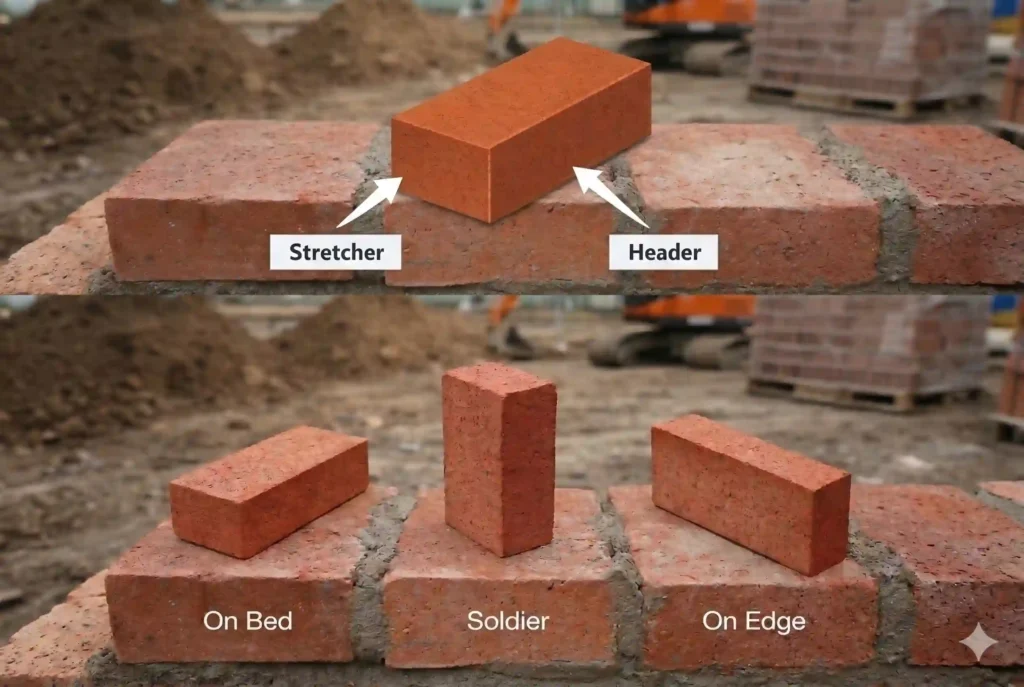
Here’s the catch I always warn trainees about. Pretty brickwork comes with a maths problem. Decorative bonds use more headers, which are the short ends of the brick. That completely changes how many bricks you need and how you order them. Get it wrong and you either waste money or run short mid job.
Stretcher Bond: The Modern Standard
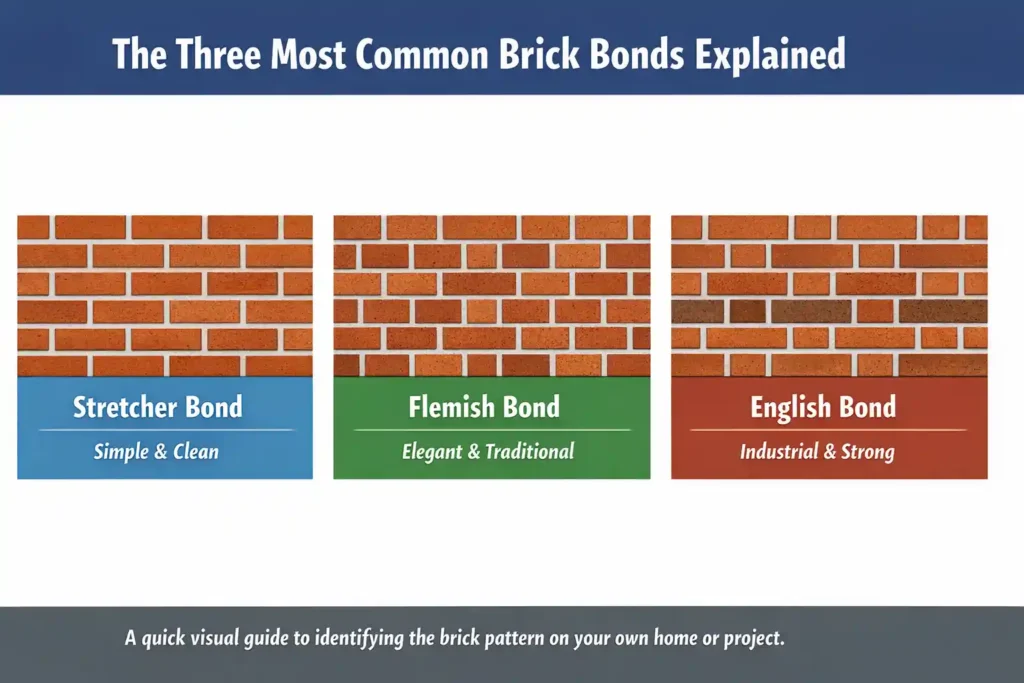
When people talk about brickwork today, this is what they usually mean. Stretcher bond, also known as running bond, is bricks laid lengthways with each course offset by half a brick. Simple, clean, and it works on almost every house you see going up now.
Site Fact: Why Stretcher is the Modern Standard
Stretcher is the absolute perfect fit for modern UK cavity walls. The outer skin of a cavity wall is only half a brick thick. Because stretcher lays all the bricks lengthways, it goes up incredibly fast and uses the fewest bricks possible. It is the absolute most cost effective way to build today.
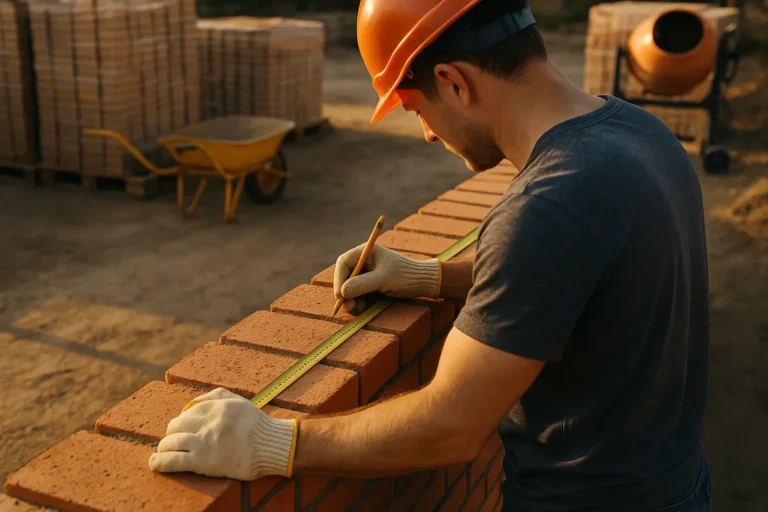
This is the DIY favourite and I can see why. It’s the easiest bond to set out, forgiving if you are learning, and it keeps labour time down. If your lines are straight and your levels are right, it’s hard to make it look bad. Most site lads learn stretcher bond first before touching anything more decorative.
Pro Detail: The Soldier Course Cap
If you are building a basic stretcher bond garden wall, do not just finish the top with another flat row. To give it a proper professional finish, you need a soldier course. This is where you take your bricks and stand them straight up on their ends. Not only does it look brilliant, but it actually protects the softer facing bricks underneath from the terrible British weather
Now the math side is where stretcher bond really shines. In the UK, the old rule still holds true. You’re looking at roughly 60 bricks per m2. That’s why you’ll see so many searches for stretcher bond bricks per m2. It’s predictable, easy to calculate, and easy to order. For basic walls, extensions, and garden work, this bond keeps costs sensible and headaches low.
Flemish Bond: The Classic Aesthetic
Now this is where brickwork starts to show a bit of class. Flemish bond is an old school pattern where you alternate stretchers and headers in every single row. Long side, short side, all the way along. It sounds simple, but on site it needs a bit more care and a better eye.
The look is the reason people choose it. Flemish bond gives you that rich, almost checkerboard texture you see on Georgian and Victorian houses. I’ve worked on refurb jobs where the client didn’t care about anything inside, as long as the front elevation matched the original brickwork. When it’s done right, it makes a building feel solid and well thought out.
Brickie Warning: The Cavity Wall Damp Trap
If you are building a modern cavity wall but want that beautiful historic Flemish look, you cannot just turn a full brick sideways! Using a full size header brick will completely bridge the cavity gap. Moisture will travel straight across that brick from the outside in, which can lead to massive damp issues inside the house. You must always use snapped headers, which are bricks cut right in half, to get the visual checkerboard effect safely.
Here’s where I always stop trainees and make them think. The maths changes completely. Because every other brick is turned sideways, you’re not just dealing with full bricks anymore. You’ll be using a lot of snap headers, which are half bricks cut on site. That affects your quantities, your wastage, and your labour time. Guessing with decorative brick patterns usually ends with missing bricks, uneven courses, or a panic order halfway through the job.
English Bond: The Heavyweight Champion
If Flemish bond is about looks, English bond is about strength. This is the heavyweight of brick bonds and it’s been trusted for hundreds of years. The pattern is simple to explain. One full row of stretchers, then the next full row of headers, and you repeat that all the way up the wall.
The big benefit of English bond is how solid it is. Those regular header courses tie the wall together properly, not just the face but the full thickness. That’s why you see it used on old bridges, tall retaining walls, and serious civil engineering work. When a wall needs to last and take load, this bond has a proven track record.
Now here’s the bit people underestimate. The brick count jumps fast. Because of the heavy use of headers, English bond can use anywhere from 90 to 120 bricks per m2, depending on wall thickness. I’ve seen jobs run short because someone priced it like stretcher bond. That mistake costs money and time. With this bond, guessing is expensive
Comparison table of Stretcher, Flemish and English bond
Brick Bond | Visual Pattern | Structural Strength | Material & Labour Cost | Best Modern Application |
|---|---|---|---|---|
Stretcher Bond | Bricks laid lengthways, offset by half a brick. | Medium. Lacks the interlocking strength of header bonds. | Low. The most cost-effective, using the least mortar and cutting. | Modern cavity walls, residential extensions, and basic garden walls. |
Flemish Bond | Alternating stretchers and headers in every single course. | Medium to High. Provides good stability, especially for walls one brick thick. | High. Requires more facing bricks, snap-headers (cutting), and skilled labour. | Heritage extensions, Victorian/Georgian renovations, and high-end facades. |
English Bond | Alternating full courses of stretchers and full courses of headers. | Very High. Generally considered the strongest traditional bond. | Very High. Requires the highest density of facing bricks and careful alignment. | Retaining boundary walls, bridges, and heavy load-bearing structural projects. |
Decorative and Speciality Bonds
Right, let us move past the standard stuff and look at the decorative and speciality bonds. In my 14 years on site, these are the patterns that really make a wall stand out, but they come with their own specific set of rules.
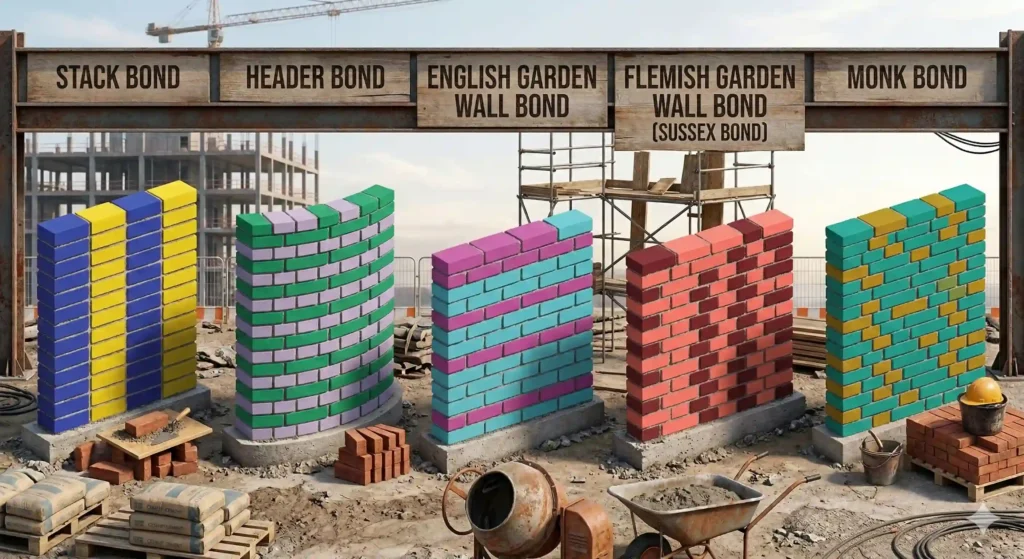
Stack Bond In a stack bond, bricks are laid directly on top of each other with all the vertical joints perfectly lined up. It looks incredibly modern and sharp, but let me warn you, it is structurally very weak. Because there is no overlapping to spread the weight, you absolutely must use metal wire bed joint reinforcement to stop the wall cracking or falling apart.
Header Bond This one is literally just courses made entirely of headers, with each row offset by half a brick. We mainly use this for curved walling or radial brickwork because the short faces handle the tight radius beautifully. It is exceptionally strong, but be careful, it eats through your brick supply and gets very expensive very quickly.
English Garden Wall If you want a traditional look without the massive cost, this is brilliant. You lay three courses of stretchers followed by one full course of headers. It uses fewer facing bricks than a standard English bond, making it a highly economical choice for boundary work.
Flemish Garden Wall (Sussex Bond) Also known as the Sussex bond, this pattern places three stretchers and one header in every single course. It breaks up a long wall perfectly and saves you money on those expensive header cuts.
Monk Bond Finally, the monk bond features exactly two stretchers sitting between the headers in each course. It creates a really lovely zig zag pattern and is slightly less labour intensive than a full Flemish bond because you are cutting fewer bricks.
Strategy: Calculating for Complex Patterns
This is where most people fall into the same trap, and I stop them before the bricks even arrive. The moment you move away from stretcher bond, you start cutting bricks. Half bricks, snap headers, and closers at corners become part of the job. On paper, everything looks neat and tidy. On site, it never is. If you order the exact number the calculator gives you, you will run out before you even finish the third row. I’ve watched lads scratching their heads, wondering where the bricks went.
This is what I call the half brick trap. Every cut creates waste. Every decorative pattern multiplies that waste. You are not just losing brick length, you’re losing time. A chipped brick gets thrown aside. A bad cut won’t sit right and ends up in the skip. By the end of the day, it all adds up.
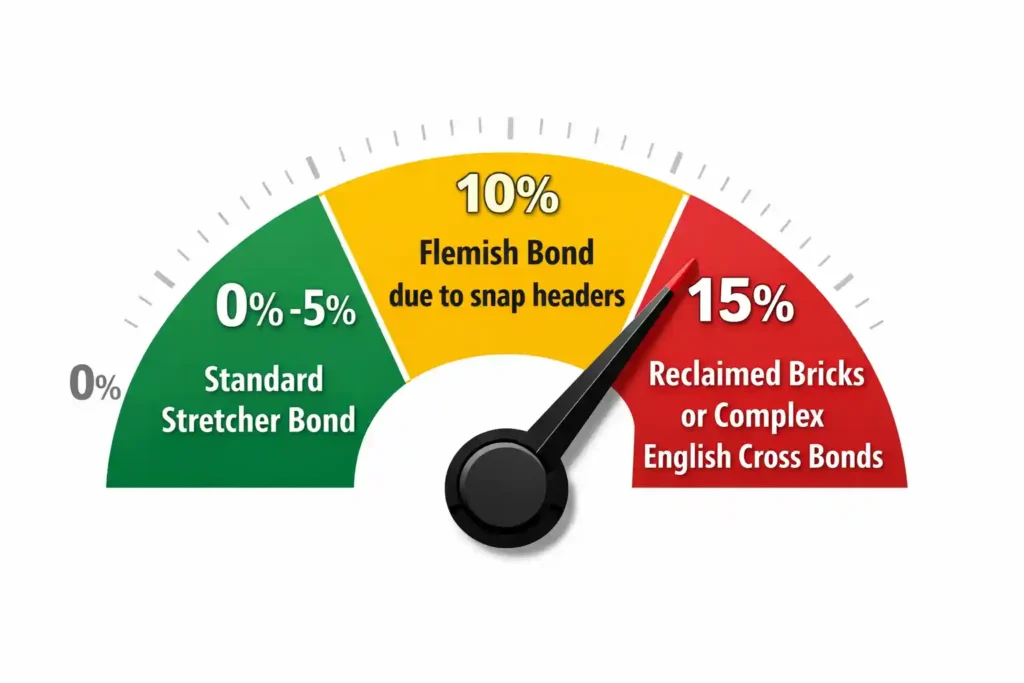
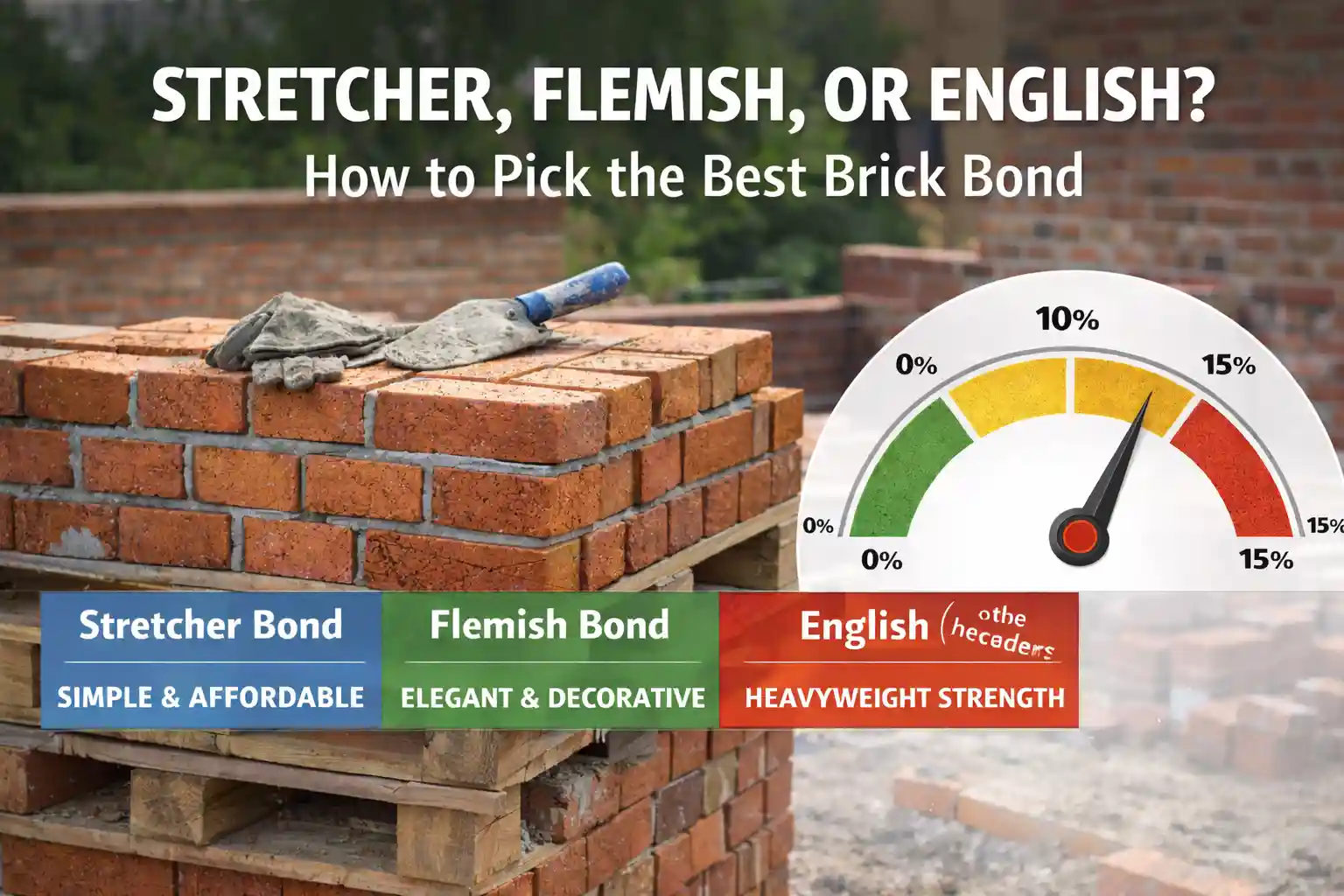
That’s why planning matters more with complex patterns. Decorative bonds look great, but they are less forgiving than simple layouts. Complex patterns lead to more wastage and intricate cutting. We recommend adding at least 10 percent extra to your Brick Calculator results if you’re attempting a Flemish bond or English bond. That allowance covers snap headers, corner closers, breakages, and the real world losses that never show on drawings.
Summary: Which should you choose?
So which bond should you choose? It really comes down to what you’re building and why. If you’re on a tight budget or doing a DIY job, stretcher bond is the sensible option. It’s easy to set out, forgiving, and keeps your costs under control. If you’re after a proper heritage look and want that classic character, Flemish bond is hard to beat. It takes more planning, but the finish speaks for itself. When strength is the priority, especially for retaining walls or structural work, English bond is the one I trust.
Before you buy your pallets, take a few minutes to plan it properly. Use our Brick Calculator to compare your single skin vs double skin needs. Getting the numbers right first saves money, time, and stress later on.