
Concrete Calculator
More Free Tools You Might Find Helpful




More Free Tools You Might Find Helpful
Bricklaying Costs 2026: The Complete Price Guide for Materials & Labour
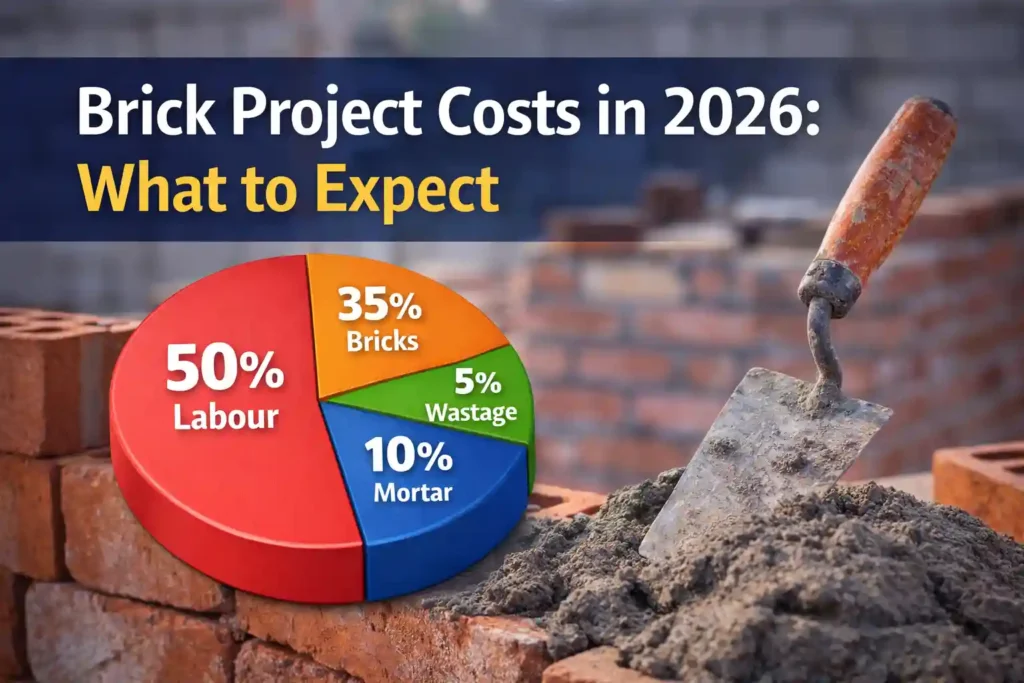
Introduction: The 2026 Price Landscape After a rough few years on the tools, things have finally calmed down a bit…The Ultimate UK Guide to Spalling Bricks and How to Fix Them
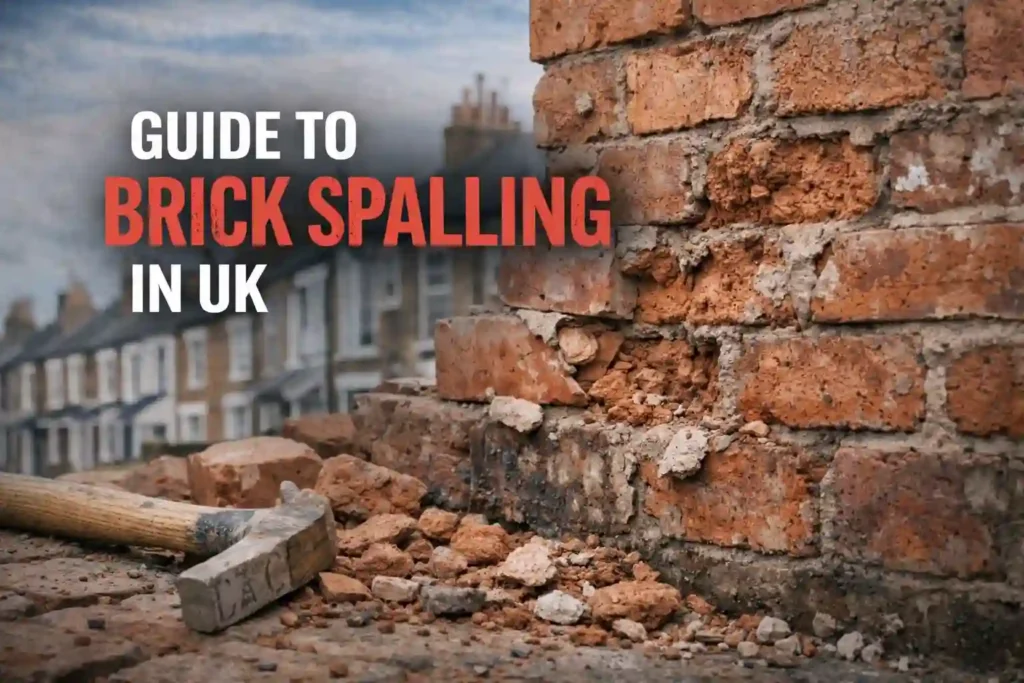
The Ugly Truth About Blown Bricks I have spent well over 14 years on building sites across the UK and…Popular Brick Bonds: Choosing Between Stretcher, Flemish, and English Bonds
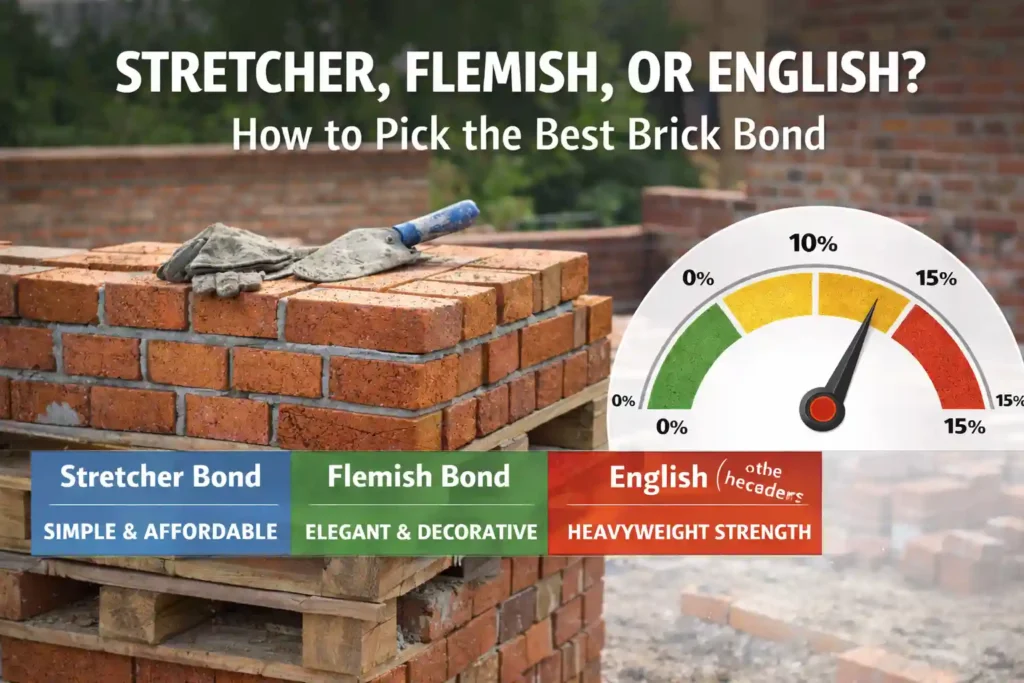
Introduction When you’re standing on site, a brick wall is never just a pile of clay stacked up. It’s a…


Introduction
Ever search online for a concrete calculator and still feel unsure how much mix to buy? This tool is meant to be that simple, kinda honest helper on your job site, not a math lesson. Just pick your shape: be it a slab, footing, wall, square or round column, strip foundation, stairs, curb & gutter, (whatever you can think, we tried to included almost all the practical shapes) from our concrete volume calculator and it works out the totals volumes in yards, feet and metres.
It also acts like a concrete bag calculator, showing how many 80, 60, 50 and 40 lb. bags you need, so you’re not guessing. Need weight too? The built-in concrete weight calculator gives you the load in both metric and imperial, with a small wastage factor added so you don’t run short. Basically, if you’ve ever thought “how much concrete do i need?” this little concrete estimator has your back.
How to use this concrete calculator
Steps | What to do |
|---|---|
Step 1: | Start by picking the shape that looks like your project. Square or rectangle for slabs and patios (concrete slab calculator style), round for post holes, walls for foundations, columns, strip footing, stairs, curb & gutter, etc. If you’re doing footings, it basically works like a small footing calculator too. |
Step 2: | Next, choose if you want to work in imperial or metric. Just select the system you’re used to on site, so numbers feel natural and you don’t need to convert everything in your head. |
Step 3: | Now type in the length, width, height or diameter for your shape. You can switch between cm, mm and meters, so it fits whatever is on your drawing or tape measure. Try to measure as accurate as you can, it really helps. |
Step 4: | Use the “Waste” dropdown to add a bit of extra concrete. This covers small mistakes, uneven soil, forms not perfectly straight, and the concrete that stays in the chute, mixer or wheelbarrow. It’s better to have a little left over than run short mid-pour. |
Step 5: | Choose the density for your mix. The default value 2130 kg/m³ (about 133 lb/ft³) is fine for most normal concrete jobs, so you can leave it unless you know your mix is different (like special lightweight or heavy-duty mixes). |
Step 6: | Hit calculate and the tool shows the concrete volume in several units, plus total weight in metric and imperial. It also tells you how many 40, 50, 60 and 80 lb concrete bags you’ll need, so you can plan your trip to the store without guessing or overbuying. |
What is concrete?
Concrete is basically man-made rock. You take cement, mix it with sand, stone and water, and you get a thick, wet paste that you can pour into almost any shape. After a few hours it starts to set, and over the next days and weeks it gets harder and stronger. That’s the stuff your driveway, patio, footings and a lot of walls are made of. When you use a concrete calculator, you’re just figuring out how much of this “liquid rock” you need to fill your form.
Concrete mix Ratios
Concrete Grade | Mix Ratio | What it means | Strength | Typical Use |
|---|---|---|---|---|
M5 | 1 : 5 : 10 | 1 part cement, | 5 MPa / ~725 psi | Blinding layers, leveling under footings, non-structural fill |
M7.5 | 1 : 4 : 8 | 1 part cement, | 7.5 MPa / ~1,085 psi | Kerbs, small beds under footings, light non-load bearing work |
M10 | 1 : 3 : 6 | 1 part cement, | 10 MPa / ~1,450 psi | Simple paths, basic floor bases, light duty slabs |
M15 | 1 : 2 : 4 | 1 part cement, | 15 MPa / ~2,175 psi | House floors, plain slabs, light foundations |
M20 | 1 : 1.5 : 3 | 1 part cement, | 20 MPa / ~2,900 psi | Regular structural work, beams, slabs, columns |
M25 | 1 : 1 : 2 | 1 part cement, | 25 MPa / ~3,625 psi | Heavier duty slabs, columns, light industrial floors |
Comparison of different Concrete Strengths

Lightweight Concrete
This is the “easy on the structure” mix. It uses lighter aggregates, so it comes in around 1700–1900 kg/m³ (about 105–120 lb/ft³). Typical strength is roughly 2500–3500 psi. You’d use something like this on roofs, decks, or places where weight really matters more than raw muscle. In the concrete mix calculator you’d pick this when you care a lot about total load.

Standard / Everyday Concrete
This is the stuff most driveways and patios are made from. Density is roughly 2100–2400 kg/m³ (about 130–150 lb/ft³), with common strengths around 3000–4000 psi. If you’re doing slabs, footpaths, small footings, this is usually the default.

High-Strength / Heavy Concrete
Here you care about serious strength, sometimes extra weight too. Density can go above 2500 kg/m³ (over 155 lb/ft³), and compressive strength often starts around 5000 psi and climbs from there. It shows up in industrial floors, columns, machine pads, maybe where you’d normally check a concrete strength calculator or concrete psi chart before ordering. Not for every job, but when you need it, you really need it.
Bagged or Ready-Mix Concrete? What to order?
If your concrete calc shows you only need a small amount, bagged concrete is usually the better call. It works well for little jobs like steps, a mailbox base, small pads or repair work. You just grab some 40, 50, 60 or 80 lb bags, mix them yourself and pour. No truck, no minimum order, and it is easier to handle in tight or hard to reach spots.
If the numbers on your concrete yardage calculator are closer to one cubic yard or more, then ready mix concrete starts to make a lot more sense. The plant mixes it correctly, the truck brings it all at once and you can place the whole slab or footing in a single pour.
Simple rule of thumb
- Small projects and plenty of time → go for bags.
- Bigger slabs and footings, want it done fast → order ready mix concrete.
The “waste factor”
The “waste factor” isn’t some trick to sell you more concrete, it’s just real life on site. Forms aren’t perfect, ground is a bit wavy, some mix sticks to tools, chute, wheelbarrow… and there’s always a little spill no matter how careful you are. That’s why most crews add around 5–10% on top of the clean math. Our concrete mix calculator does the same: when you pick a waste percentage, it simply increases the volume slightly, then turns that into yards, weight and bags. So instead of stopping mid-pour and running back to the store, you’ve got that extra bit ready to go.