Do You Need a Permit for a Concrete Patio? Everything you need to know
TL;DR Most ground-level concrete patios don’t require a permit, but factors like height, drainage, and proximity to your home’s foundation can quickly change the rules. Find out about permits in US and UK cities. Once you know the rules, our free concrete calculator shows how much concrete your patio needs.
Introduction:
I have poured a lot of concrete patios over the years. Big ones, small ones, fancy stamped ones, and plain gray slabs behind starter homes. And I can tell you this. Most patio problems do not start with bad concrete. They start with bad assumptions.
The biggest assumption I see is this.
It is just a patio. It sits on the ground. Why would I need a permit?
That question has cost homeowners thousands of dollars, stopped jobs halfway through, and caused headaches when it came time to sell the house. So let me walk you through this the same way I explain it to clients on site. No legal talk. No code book language. Just how permits actually work in the real world.
What counts as a concrete patio in permit terms?
From a permit standpoint, a concrete patio is usually considered flatwork. That means a slab poured on the ground for outdoor use. Not a building. Not a structural addition.
As long as the patio is ground level, not attached to the house, and does not include footings, walls, or a roof, most building departments do not treat it like a structure.
But here is the part people miss. The moment a patio crosses certain lines, it stops being simple flatwork and starts being something inspectors care about.
Who decides if a concrete patio permit is required?
In United States, there is no “applicable to all” rule book. All matters related to it handled locally.
That usually means:
- City building department
- County building department
- Planning or development services office
Two houses on opposite sides of the same street can technically fall under different rules. That is why advice from friends or online forums often gets people in trouble.
Here is a warning for you. Even if the city says no permit is needed, a homeowners association (yes famous HOA) can make your life difficult. I have seen it happen all the time.
When you usually need a permit for a concrete patio in the US
Here is the short answer most homeowners want.
You usually need a permit if:
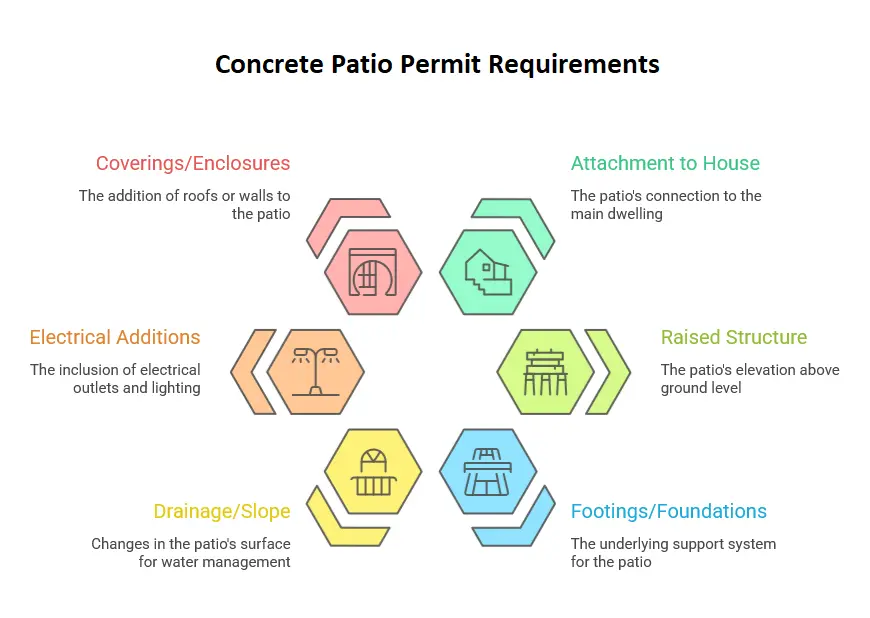
If your project checks even one of those boxes, assume a permit is required until proven otherwise.
Patios attached to the house change everything
The fastest way to turn a simple patio into a permitted project is to tie it into the house.
Once concrete touches the foundation, inspectors worry about water, frost movement, and structural impact. Even a small connection can trigger permit review.
I always tell homeowners this. If the patio touches the house, expect paperwork.
How high can a concrete patio be without a permit?
This question comes up all the time.
In many US cities, a concrete patio does not need a permit if it is less than 30 inches above adjacent ground level. That number shows up in building codes across the country.
Once you go higher than that, the patio is often treated like a structure. Guardrails, steps, and safety rules kick in. And permits follow right behind.
If you are planning a raised patio or one that steps down with retaining edges, check first. Height is one of the most common permit triggers inspectors use.
Does patio size affect permit requirements?
For most homes, small ground level patios do not require permits. But size still matters.
Very large slabs can trigger review even if they are on grade. In some cities, paving areas over 3000 square feet require permits because of drainage and land coverage concerns.
That usually affects:
- Large backyards
- Sport court style slabs
- Multi use patios
If your patio feels big when you are staking it out, it is worth checking.
Drainage and slope are what inspectors really care about
If you want to know the real reason patio permits exist, here it is. Water.
A concrete patio changes how rain moves across your property. If that water ends up against your foundation, in your neighbor’s yard, or flooding a sidewalk, the city gets involved fast.
A patio usually needs a permit if it:
- Changes the slope of the yard
- Redirects runoff toward the house
- Pushes water toward neighboring property
- Covers soil that used to absorb rain
I have seen small patios require permits and large ones pass without issues. Drainage was the difference every time.
Where you build matters more than what you build
Some locations almost always trigger permits, no matter how simple the patio is.
These include:
- Utility easements
- Public right of way areas
- Flood zones
- Hillside or sloped lots
- Environmentally sensitive land
Pouring concrete over an easement is one of the fastest ways to get a stop work order. Utility companies do not mess around with access rights.
Historic and zoning rules catch people off guard
If your home is in a historic district or has special zoning restrictions, patio rules get stricter.
Historic areas often require design review even for ground level concrete. Zoning rules may limit how close patios can be to property lines or how much of the yard can be covered.
These rules exist to protect neighborhoods, but they surprise homeowners who assume patios are always exempt.
HOA rules can override city approval
This part frustrates people, but it is reality.
Even if the city says no permit is needed, an HOA can still block the project. HOAs regulate:
- Patio size
- Materials and finishes
- Distance from fences and property lines
- Overall appearance
City approval does not cancel HOA rules. You usually need both.
What about concrete patio permits in the UK?
Since brickcalculator.co.uk serves both markets, this is worth clearing up.
In the UK, most ground level concrete patios fall under permitted development and do not need planning permission.
Permission may be required if:
- The patio is raised
- Drainage causes water to flow toward the house
- The property is listed
- The home is in a conservation area
- Hard surfacing covers most of the garden
Just like in the US, drainage is the big issue.
Patio permit mistakes I see all the time
After years on site, these are the mistakes that keep repeating.
- Assuming ground level means no permit
- Ignoring drainage direction
- Building over easements
- Skipping HOA approval
- Adding covers or walls later without approval
Most of these problems start with rushing. Permits feel slow until you compare them to ripping out finished concrete.
How to check if you need a permit fast?
You do not need a lawyer or a consultant. Just do this.
In the US:
- Search concrete patio permit plus your city
- Visit the local building department website
- Call the permit office if anything is unclear
- Ask specifically about height, attachment, and drainage
In the UK:
- Check your local council website
- Review permitted development guidance
- Ask about drainage and elevation
Five minutes on the phone can save weeks of trouble.
What you should plan before applying for a permit
Inspectors will usually ask for basic information:
- Patio length and width
- Concrete thickness
- Height above ground
- Slope and drainage direction
This is where planning pays off. Knowing your dimensions ahead of time makes permit conversations easier.
Before you call the permit office, you’ll need your project’s exact dimensions and material requirements ready. To get your measurements and volume estimates in seconds, use our free Concrete Calculator it’s the easiest way to ensure your plans are accurate before you file any paperwork or order your pour.
What happens if you skip a concrete patio permit?
I have seen every version of this story.
Skipping a required permit can lead to:
- Stop work orders
- Fines
- Forced removal of finished concrete
- Problems during home inspections
- Delays or price cuts when selling the house
Permits are usually cheap. Fixing unapproved work never is.
Final advice before you pour concrete
A concrete patio looks simple, but the rules around it are not. In most cases, permits are about height, attachment, drainage, and location, not the concrete itself.
If you are unsure, ask first. Build once. Pour once.
That is how good projects stay good long after the concrete cures.
Frequently Asked Questions (FAQ’s)