
The Masonry Masterclass: How Smart Planning Saves You Pounds on Bricks, Blocks, and Mortar
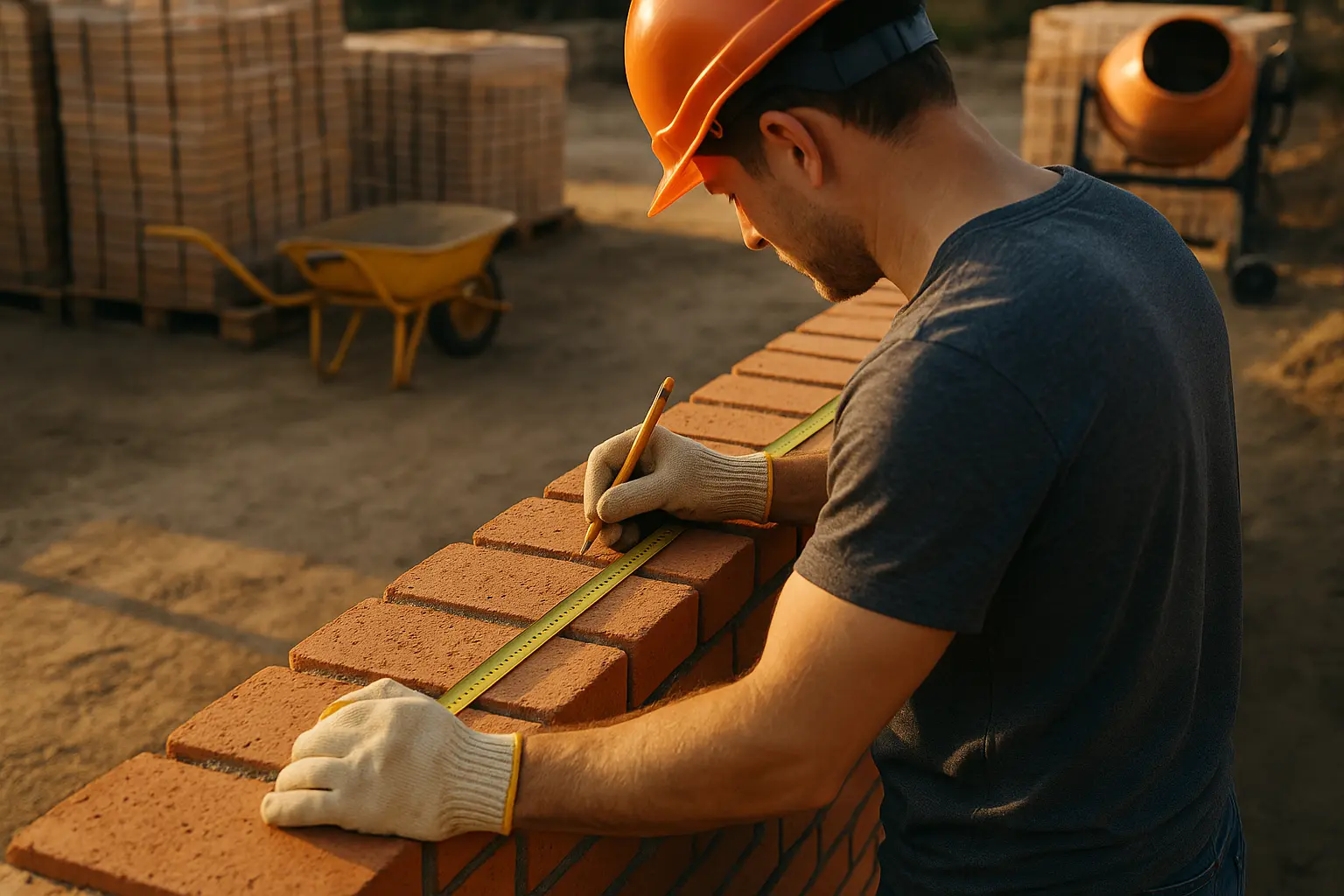
TLDR: Get your brick, block, sand, and cement numbers right before you start, because smart planning saves money, avoids delays, and keeps your build clean instead of fixing mistakes later. Before you order anything, check your numbers with our free brick calculator or block calculator. Both work out mortar and cost as well.
Introduction:
Imagine placing a brick that fits just right, your garden wall stands straight, imagine your new patio looks clean and solid in the sun. That’s the goal for every DIY builder. You can picture the wall already, but jobs do not succeed on pictures. They succeed beyond the blueprint, in the quiet work of planning. What gets in the way? Numbers that don’t add up, the tension of arranging all the required material in number and quality. Worrying you’ll run out of bricks, blocks, sand, or cement. Costs popping up and draining your pounds.
If you do not nail the numbers on bricks, blocks, sand, and cement, the site will do it for you with delays, do overs, and a busted budget.
The fix isn’t just hard work, it’s smart planning. Start your project with confidence by calculating exactly what you need. No guesswork. No waste. Just the right materials, the right budget, and a build you’re proud of.
Get the materials right and the whole job gets easier. You will spend less on deliveries, avoid extra runs to the yard, cut down on waste, and keep stress off the team. Stacks arrive once, they are counted once, and they go straight into the build.
The Crucial Role of Masonry Material Planning
Why Masonry is Unique?
Masonry is not like painting a room or swapping a tap. Bricks, blocks, sand, and cement are heavy, bulky, and delivered in set quantities. You do not toss a few extra bags in the boot. You book a pallet, a ton, or a load, and every miscount shows up as wasted money or a stalled crew. A missed allowance for cuts or breakage can halt the job. A wrong mortar ratio can stain or weaken the wall. Even site access matters because a tight drive or soft ground can turn one delivery into three. Good masons plan ahead. We size it to standard units, set realistic waste, schedule drops to match the build, and lock in mixes that suit the exposure the wall will face e.g. (rain, frost, salts, traffic). Get that right and the wall climbs smoothly, the budget holds, and the only surprise is how clean the finish looks.
Common Pitfalls:
Under-Ordering:
Running short sounds small, but it wrecks a job. The crew stops, the mixer sits, and you pay for time with nothing built. You call the yard and end up with a second or third drop, each with its own delivery fee. Those extra loads may come from a different pallet or dye lot, so brick color and texture can shift. That mismatch shows up forever in the wall.
Avoid it with a clear count, not a guess. Measure net wall area, subtract openings, then add a real waste allowance for cuts and breakages. Confirm pack sizes and order full pallets where you can. If access is tight, stage the drops but from the same batch. A little extra on site is cheaper than a cold joint, a color change, or a silent site.
Over-Ordering:
Ordering too much feels safe until the bill lands. Extra pallets tie up cash and crowd the site. Bricks and blocks need dry, level storage; if they get wet or damaged, you paid for waste. Leftovers are not free either. You will pay to move them, store them, or dispose of them, and some yards will not take mixed returns. Mortar materials age as well. Cement can cake, sand can contaminate, and you lose quality. Over-ordering also carries an environmental cost from extra production and transport.
Prevent it with a tight takeoff. Measure carefully, subtract openings, and use a realistic waste allowance, not a guess. Confirm pack sizes, round to sensible quantities, and time deliveries to match the build so materials go straight into the wall. Before you order materials, check local rules in the Planning Portal guide to walls, fences and gates .
Mortar Miscalculations
Been there. Meant to mix 1:4, rushed it, ended up closer to 1:3 and the joints went tight and chalky. Another time I ran out of sand halfway. The first half of the wall was one shade, the second half another. It looks bad forever. Fix it this way: measure the dry mix first. One bucket cement, four buckets sand, repeat so every barrow matches. Keep a spare bag of cement and some extra sand on site. Mix smaller batches, test a trowel, then commit. Better one minute measuring than a day repairing joints. Our mortar calculator works out the cement and sand before you open a single bag.
The Cost of Imprecision
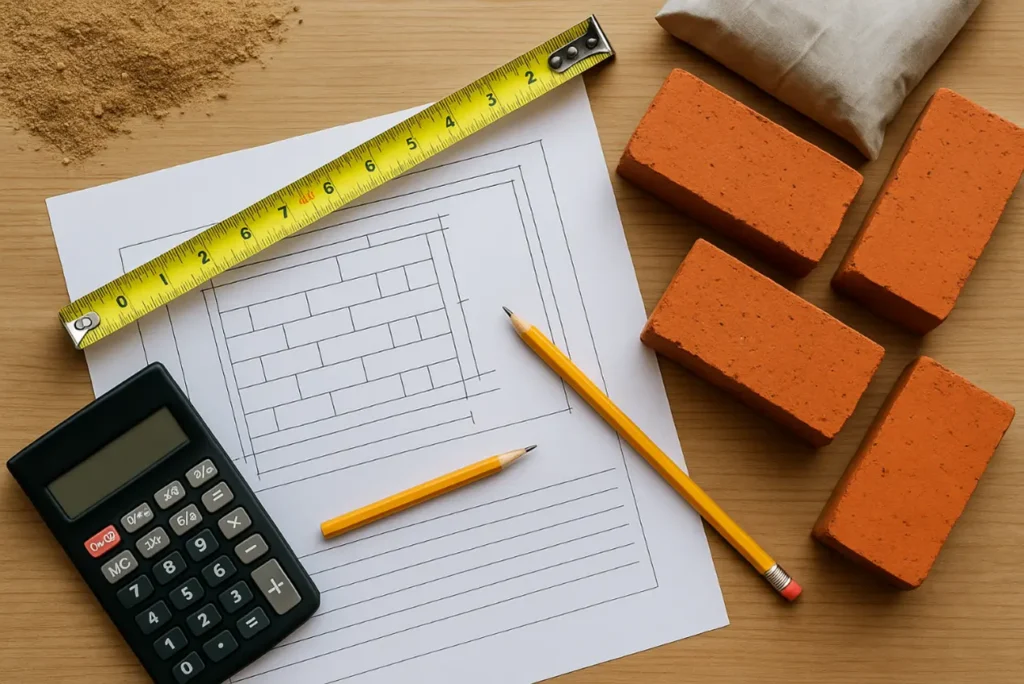
Tiny mistakes look harmless on paper, but they empty the wallet fast. Miss the wall length by a few centimeters or assume the joint size instead of measuring and you end up a couple percent short on bricks and sand. That means a second trip from the yard with another delivery fee, fuel surcharge, maybe a small load premium. If access is tight the driver waits and you pay a standing charge while the crew does nothing. Mix ratios guessed instead of counted lead to batches you cannot match, so you waste material fixing color bands and rough joints. Over order to cover the guess and now you are paying to store leftovers or to haul them away. None of this shows in the first estimate, but it stacks up fast. The cure is boring but cheap. Measure twice, count to pack sizes, set a real waste allowance, and plan deliveries to land when you need them.
Conclusion:
Alright, last word from me, jobs go smoother when the numbers are sorted before the shovel hits the ground. Measure the wall, count the bricks or blocks, plan the sand and cement, and most of the stress just… doesn’t show up. If you want a quick helper while you sketch things out, try this brick calculator ,pop in the size, there are plenty here for both brick and block, tweak the mortar joints and waste percentage, and you’ll have a solid shopping list. Not fancy, just practical, and it saves you from that “uh oh, we’re short” run to the yard.



Awsome. Great article.